Source electric flashing musical spinning top for toys, education, and events
Compare 30 listings for the electric flashing musical spinning top from verified Chinese manufacturers. Buyers can evaluate specifications, pricing, and packaging options to find the best fit for wholesale needs.
Key considerations
Products List




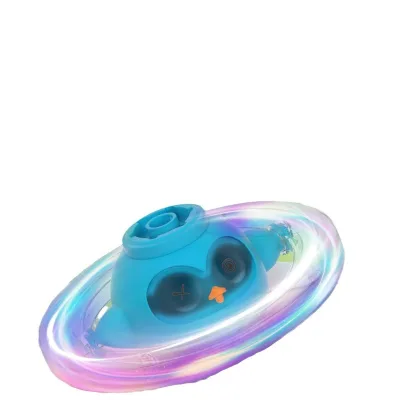


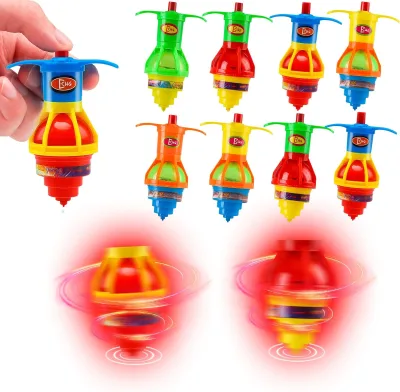
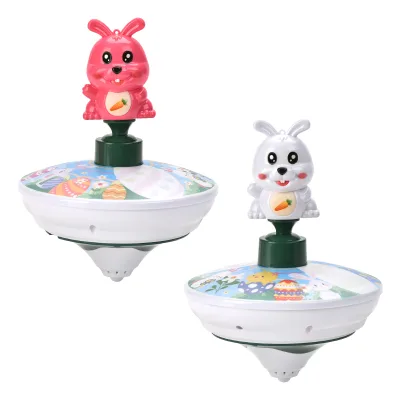

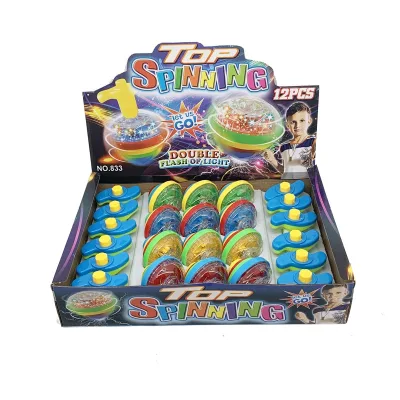
Comprehensive Sourcing Guide
Strategic Sourcing Guide for Electric Flashing Musical Spinning Tops
Understanding Product Specifications and Variability
When sourcing electric flashing musical spinning tops, buyers must first navigate the significant variance in technical specifications found within the broader toy and spinning category. The core keyword implies a specific intersection of mechanical rotation, electronic illumination, and audio output, yet the actual market data reveals a diverse landscape of product attributes. In the current supply environment, spinning tops are often categorized by their fiber composition or material base, ranging from 100% acrylic staple fibers to general plastic constructions. This distinction is critical because the material dictates the durability, weight, and safety profile of the spinning mechanism.
For the specific "electric flashing musical" variant, the power source is a definitive specification. Evidence indicates that battery-operated units are the standard configuration for this product type. Buyers should verify the battery compartment design, as this directly impacts the longevity and safety of the toy. Furthermore, the physical dimensions of the product vary widely. While some entries in the market data reference specific models like "KSL755790 Kids Spinning Top Toy" with a "Small" size classification, others may be larger or designed for different age groups. The standard packaging dimensions for these items often include specific carton sizes such as 774185 cm or 684264 cm, which suggests that the product itself is compact but requires substantial volume for shipping due to protective packaging.
The feature set for these tops often includes "Anti-Pilling" and "Heat-Resistant" properties, particularly when the outer casing involves textile or fiber blends. However, for the plastic-based electric models, the focus shifts to the integrity of the plastic shell and the resistance of the internal electronics to heat generated by the motor or battery. The "Staple" fiber type mentioned in the data likely applies to the decorative or grip elements rather than the structural core of the electric unit. Buyers must distinguish between the spinning top as a standalone mechanical toy and those that incorporate fabric elements, ensuring the specifications align with the intended use case.
Compliance and Certification Verification
Safety compliance is the most critical factor when importing electric toys, especially those involving flashing lights and sound. The market data explicitly lists several key certifications that serve as benchmarks for quality and safety. The "En71" standard is a prominent requirement, alongside "ASTM" (American Society for Testing and Materials) and "10p" (likely referring to specific phthalate limits) and "Hr4040" standards. These certifications are not merely administrative; they represent rigorous testing for mechanical hazards, flammability, and chemical safety.
For electric spinning tops, the presence of the "Battery" attribute necessitates specific attention to electrical safety standards. While the provided data confirms that "ASTM" and "EN71" are available certifications for similar products in the category, buyers must verify that the specific supplier's batch holds valid, current certificates for the electric variant. The "10p" and "Hr4040" references suggest compliance with specific chemical regulations, which are essential for toys intended for children. It is important to note that while some products in the category are certified, this status is not universal across all listings. A buyer must request the actual test reports for the specific model number, such as "KSL755790" or similar, to ensure the electric components (lights and sound modules) have been tested for overheating and short-circuit protection.
The certification landscape also includes standards related to packaging and general product safety. The "EN71" standard is particularly relevant for the European market, while "ASTM" is the primary benchmark for the United States. Buyers should not assume that a product certified for one region automatically meets the requirements of another without re-verification. The data also mentions "FSC" as a background certification, which relates to paper packaging. While not a direct product safety standard, it indicates a supplier's commitment to sustainable sourcing, which can be a secondary value proposition for environmentally conscious procurement teams.
Cost Drivers and Pricing Dynamics
The pricing structure for electric flashing musical spinning tops is influenced by a complex interplay of material costs, electronic component complexity, and packaging requirements. The observed price range in the market spans from $0.03 to $9.55 USD. This wide disparity highlights the difference between basic mechanical tops and more sophisticated electronic versions. The lower end of the spectrum likely corresponds to simple plastic spinning tops without electronic features, while the higher end reflects the added cost of LEDs, sound modules, and batteries.
Material composition is a primary cost driver. Products listed as "100% Acrylic" or "Plastic" will have different cost bases. Acrylic, while offering a premium feel and anti-pilling properties, may be more expensive than standard injection-molded plastics. Additionally, the "Electric" nature of the product introduces variable costs related to the battery type, the motor efficiency, and the durability of the circuit board. The "Heat-Resistant" feature mentioned in the data suggests a potential premium for materials that can withstand the thermal output of the electronic components, which can increase the unit cost.
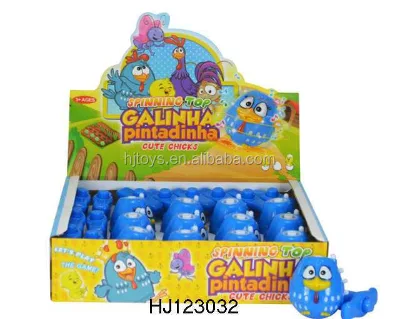
Packaging also significantly impacts the final landed cost. The data shows diverse packaging options, from "OPP Bag" to "Carton Box" and "Display Box." The "Display Box" variant, often used for retail-ready products, adds to the cost but can reduce secondary packaging needs for the buyer. The volume metrics provided, such as "Cuft/CTN" ranging from 0.183 to 0.318, and "Cb/CTN" figures, indicate that the shipping volume per unit varies. A product with a larger carton size (e.g., 774185 cm) will incur higher freight costs per unit compared to a more compact package. Buyers must calculate the total cost of ownership, including freight, by factoring in these volumetric weights.
Typical Applications and Market Segmentation
The applications for electric flashing musical spinning tops extend beyond simple play, often serving as educational tools, party favors, or promotional items. The "Spinning" usage attribute confirms their primary function as rotational toys, but the addition of "Flashing" and "Musical" features expands their utility. These products are frequently used in early childhood development settings to teach cause-and-effect relationships, as the child's action of spinning the top triggers the light and sound.
The market data indicates a specific model, "KSL755790 Kids Spinning Top Toy," which suggests a targeted demographic of young children. The "Small" size specification aligns with toys designed for fine motor skill development. In contrast, other products in the category, such as the "Electric Yellow Duck Toy" or "Plastic Toy Guitar," indicate a broader ecosystem of musical and interactive toys. The spinning top, therefore, fits into a segment of "active play" toys that combine physical manipulation with sensory feedback.
Furthermore, the "Anti-Pilling" and "Heat-Resistant" features suggest that these tops may be used in environments where durability is paramount, such as daycare centers or schools. The "Battery" power source makes them portable and suitable for various settings, from indoor playrooms to outdoor gatherings. The "Bale" and "Carton Box" packing options imply that these products are often sold in bulk for institutional use or large-scale retail distribution. The "MOQ Order" values, ranging from 240 to 2500 pieces, reflect the scale of these applications, catering to both small boutique retailers and large wholesale distributors.
Supplier Evaluation and Operational Metrics
Evaluating suppliers for electric spinning tops requires a rigorous assessment of their operational capabilities and consistency. The data reveals a wide range of Minimum Order Quantities (MOQ), from 3 pieces to 25,000 pieces. This variance indicates a market populated by both small-scale manufacturers and large-volume producers. Buyers must align their order volume with the supplier's capacity. For instance, a supplier with an MOQ of 2,500 pieces may not be suitable for a startup retailer, whereas a supplier with an MOQ of 240 pieces might be ideal for a niche market entry.
The packing and shipping metrics provide insight into a supplier's logistical efficiency. The "PCS/CTN" (pieces per carton) varies significantly, from 48 to 500 pieces. A higher PCS/CTN ratio suggests a more efficient packing process, which can reduce labor costs and shipping volume. However, it also requires careful handling to prevent damage during transit. The "G.W" (Gross Weight) and "N.W" (Net Weight) figures, such as 33 Kgs vs. 30 Kgs or 15.5 Kgs vs. 14 Kgs, help buyers calculate accurate freight costs and customs duties.
When evaluating a supplier, buyers should verify the consistency of their "prod_model" and "prod_standard" documentation. The presence of specific model numbers like "KSL755790" and "KSL301270" suggests a standardized production line. However, the "prod_standard" entries also include dimensional data (e.g., "774185 CM"), which can be confusing if not clearly distinguished from the product size. A reliable supplier will clearly separate product specifications from packaging dimensions. Additionally, the "Certificate" listings, such as "En71/ASTM/10p/Hr4040," should be cross-referenced with the specific product batch to ensure authenticity.
Quality Control and Long-Term Procurement Considerations
Quality control for electric spinning tops must address both mechanical and electronic integrity. The "Heat-Resistant" feature is a key indicator of quality, as it suggests the product can withstand the thermal stress of continuous operation. Buyers should implement a quality control protocol that includes testing the battery life, the brightness and consistency of the flashing lights, and the clarity of the sound output. The "Anti-Pilling" attribute, while more relevant to fabric components, also signals a general commitment to maintaining the product's aesthetic appeal over time.
Long-term procurement considerations involve assessing the supplier's ability to maintain consistency across large orders. The "MOQ Order" of 2,500 pieces for some products and 240 for others indicates different production scales. Buyers should ensure that the supplier can scale production without compromising quality, particularly regarding the electronic components. The "Cuft/CTN" and "Cb/CTN" data suggest that packaging efficiency is a factor in long-term cost management. A supplier that optimizes carton dimensions can reduce shipping costs significantly over multiple orders.
Furthermore, the "Standard" entries, such as "1D-2D76/88/102mm" and "2D-3D76/88/102mm," likely refer to fiber dimensions or product specifications that vary by batch. Buyers must verify that the supplier maintains strict tolerances on these dimensions to ensure the product functions correctly. The "Package Size" and "Carton Size" data also highlight the importance of storage and display considerations. A product with a "Display Box" packaging may require different shelf space compared to a "Bale" or "Window Box" variant.
In conclusion, sourcing electric flashing musical spinning tops requires a balanced approach that considers technical specifications, compliance, cost, and supplier reliability. By leveraging the observed data points and maintaining a rigorous verification process, buyers can navigate the complexities of this market and secure high-quality products that meet their specific needs. The wide range of available options, from basic plastic tops to complex electronic models, offers significant opportunities for strategic procurement, provided that the buyer remains vigilant about safety standards and operational metrics.
FAQs
What certifications are available for electric flashing musical spinning tops?
Available certifications include EN71, ASTM, 10p, and Hr4040 standards. Buyers must verify that specific batches hold valid certificates for electric components to ensure safety compliance for children.
Which power source is standard for these spinning tops?
Battery power is the standard configuration for electric flashing musical spinning tops. This ensures portability and allows the toy to operate independently of external power outlets during play.
How does the MOQ vary for different product models?
Minimum order quantities range from 240 pieces to 2500 pieces depending on the specific model and supplier capacity. Buyers should align their order volume with the supplier's stated MOQ requirements.
What materials are used to construct these spinning tops?
Products are constructed from 100% acrylic or general plastic materials. Acrylic offers anti-pilling properties, while plastic provides durability for the mechanical and electronic components.
Can customization be applied to these spinning top products?
Customization is available for these products to meet specific buyer requirements. Buyers should confirm the extent of customization options with the supplier before placing an order.
What is the typical packaging format for these toys?
Packaging formats include OPP bags, carton boxes, and display boxes. The specific packing type affects the carton size and pieces per carton for shipping efficiency.
Which standard dimensions apply to the product specifications?
Product standards include fiber dimensions like 1D-2D*76/88/102mm and carton sizes such as 77*41*85 cm. These dimensions vary by model and packaging configuration.